August 22, 2026
About the Author: S&C Music

Most parents will, at some point, hear their child say that they no longer want to continue with an activity they were once excited about. When that activity is music, the announcement can be particularly disappointing or confusing, especially after you have invested time, money and encouragement into their lessons.
However, a child wanting to stop does not necessarily mean that their music education has failed.
Motivation naturally changes, particularly as lessons become more challenging or other areas of life begin to demand more of their attention.
The most important first step is not to immediately agree or refuse, but to understand why your child wants to stop.
Sometimes the difficulty is temporary.
In other cases, a genuine change may be the right decision.
Understanding what to do when your child wants to quit music lessons begins with listening carefully to the reasons behind their feelings.
Taking the time to understand what is happening can help you respond thoughtfully, supportively and with your child’s long-term relationship with music in mind.

Find Out What Is Really Behind The Decision
When a child says, “I want to quit”, there may be much more behind those words than a simple dislike of music.
They may be struggling with a difficult piece, growing tired of their current repertoire or simply going through a particularly demanding week.
They might also be finding it difficult to balance music with school, homework, sport and other activities.
For this reason, try not to immediately assume that your child dislikes their instrument.
Instead, encourage an open conversation.
Rather than asking questions that may make them feel defensive, try something simple such as, “What has been feeling difficult lately?” or “Is there anything about your lessons that you are not enjoying at the moment?”
Give your child enough time to explain without immediately trying to correct their feelings or convince them that they are wrong.
Feeling heard is important, particularly when they are already frustrated.
Once you understand the real reason behind their wish to stop, deciding what to do next becomes much easier.
Sometimes, a request to quit is not the end of the conversation at all.
It is simply the beginning of a much more useful one.

Do Not Make The Decision During A Difficult Week
Children can sometimes make strong decisions based on feelings that are very temporary.
A frustrating lesson, a difficult practice session or a disappointing performance can suddenly make giving up seem like the easiest option.
Tiredness following a demanding week at school can also have a significant effect on enthusiasm.
For that reason, avoid making a long-term decision based on one difficult day.
Allow your child some time to settle emotionally.
It may be worth continuing lessons for a few more weeks while observing whether the same feelings remain.
Motivation naturally rises and falls during almost every learning process.
There will be periods when progress feels exciting and others when improvement seems slow.
This is a normal part of learning an instrument.
At the same time, repeated unhappiness should not simply be dismissed.
If the same concerns continue week after week, they deserve attention.
The aim is to distinguish between temporary frustration and a genuine desire for change.
Speak To The Music Teacher
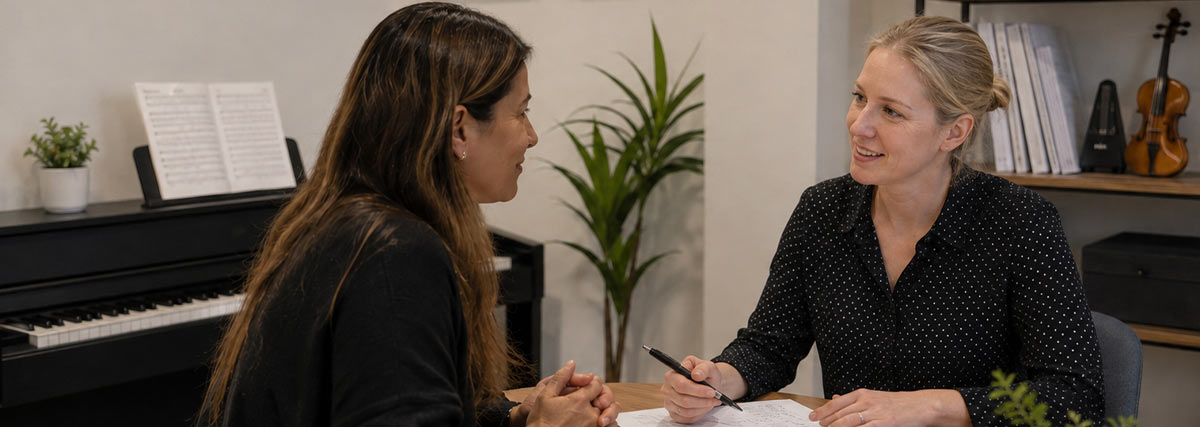
Your child’s music teacher may be able to offer valuable insight into what has been happening during lessons.
There may be changes in your child’s attitude that are not particularly noticeable at home.
Perhaps they are struggling with a particular skill or piece, or they may be disappointed because their progress does not feel as quick as they expected.
Speaking privately with the teacher can help you understand the situation more clearly.
Ask whether they have noticed a decline in your child’s engagement, increased frustration or a loss of confidence.
A good teacher may also be able to adjust the repertoire, pace of learning or teaching approach to address the problem.
Sometimes a surprisingly small change can make lessons feel exciting again.
A different song, a shorter practice goal or a new musical activity may be enough to renew a child’s interest.
Teachers can also help parents understand whether a difficult period is simply a normal stage in musical development.
However, it should not become the teacher’s responsibility to persuade a deeply unhappy child to continue at all costs.
The best solution usually comes through cooperation between the parent, teacher and child.

Consider Whether The Practice Routine Is The Problem
Sometimes, when a child says they dislike music lessons, what they actually dislike is the experience of practising at home.
Practice may have become too long, too repetitive or too closely supervised.
Without intending to, parents can also turn every practice session into an exercise in correcting mistakes.
Take a moment to consider whether your expectations are realistic for your child’s age and level.
Would shorter, more focused practice sessions be easier to manage?
Would practising at a different time of day help?
A child who is already exhausted from school and other activities is unlikely to approach the piano, violin or guitar with much enthusiasm.
It is also important to give children some independence.
Rather than watching and correcting every note, allow them some space to explore what they have learnt.
Including pieces or songs they genuinely enjoy can also make a noticeable difference.
Not every minute at an instrument needs to feel like formal work.
When the home practice experience becomes more positive, a child’s attitude towards their lessons may improve as well.
The aim is to make practice meaningful without allowing music to become just another piece of homework.
Check Whether The Instrument Is Still The Right Fit
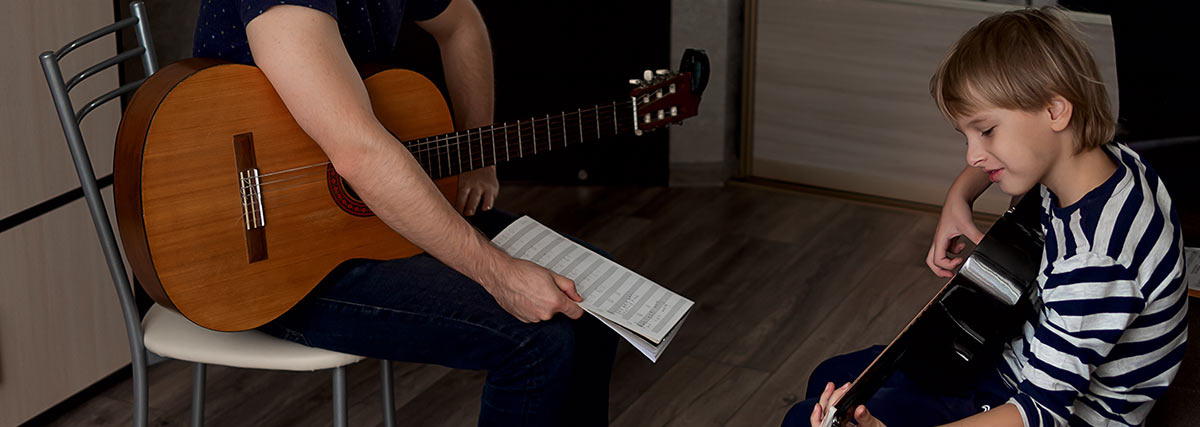
Wanting to stop playing one instrument does not necessarily mean that a child wants to give up music altogether.
Sometimes the instrument they originally chose simply turns out not to suit their personality or musical interests.
A child who finds practising the piano too solitary, for example, might become fascinated by the energy of the drums.
Another may discover that they are more naturally drawn to singing, guitar, violin or another instrument offering a different musical and physical experience.
Changing instruments should not automatically be viewed as a failure.
Trying something different can sometimes renew a child’s curiosity and enthusiasm for music entirely.
Before making the change, speak with your child’s teacher or music school.
They may be able to provide useful guidance about whether another instrument could be a better match.
If possible, an introductory lesson on the new instrument can also be helpful before making a longer-term commitment.
Finding the instrument that genuinely connects with your child can itself be an important part of their musical journey.

Look At What Else Is Happening In Your Child’s Life
A child’s attitude towards music rarely exists in isolation.
School examinations, homework, friendships, changes at home, tiredness and an overloaded weekly timetable can all affect motivation.
Sometimes children choose music lessons as the activity they want to remove simply because it is one commitment they feel they can control.
Before concluding that your child has lost interest in music, look at their week as a whole.
A child moving directly from school to tutoring, sport, homework and then a music lesson may simply be exhausted.
What appears to be a lack of enthusiasm could actually be a need for more rest.
Consider whether another activity could be reduced, whether the lesson time could be changed or whether more unstructured time needs to be protected during the week.
Most importantly, avoid confusing tiredness with laziness.
A sustainable routine gives children a far better opportunity to enjoy their musical development than a timetable in which every hour is already occupied.

Avoid Turning The Conversation Into A Battle
Forcing a child to continue indefinitely can easily create resentment towards an activity they may once have loved.
On the other hand, allowing them to stop immediately whenever something becomes difficult can prevent them from experiencing the satisfaction that comes from perseverance.
Parents therefore need to find a balance between listening and guiding.
Try to avoid making statements such as, “We have paid for these lessons, so you have to continue.”
Financial considerations are understandably important to parents, but they are unlikely to help a child communicate honestly about what they are experiencing.
Comparisons with siblings, friends or classmates should also be avoided.
Another child’s enthusiasm or progress has little relevance to your own child’s experience.
Instead, keep the conversation focused on them.
You can acknowledge that something feels difficult without immediately agreeing that quitting is the only solution.
In some situations, agreeing to continue for a short period before reviewing the decision can give everyone more time to think clearly.
The aim should be to reach a thoughtful decision, not to win an argument.
Children are far more likely to speak openly when they believe their feelings are genuinely being heard.

Know The Difference Between Perseverance And Pressure
Learning an instrument inevitably involves challenging periods.
There will be pieces that feel difficult, techniques that take longer to master and moments when progress seems frustratingly slow.
Children sometimes need encouragement to continue through those stages rather than abandoning them at the first sign of difficulty.
Overcoming a challenging passage or finally mastering something that once seemed impossible can build confidence, patience and resilience.
But perseverance and pressure are not the same thing.
Encouraging a child through a temporary difficulty is very different from ignoring prolonged anxiety, unhappiness or distress.
Instead of focusing on individual complaints, look for patterns.
Does your child still feel pleased when they achieve something?
Are there parts of their lessons that they continue to enjoy, even if practice is sometimes difficult?
Do they occasionally become excited about music, or has the entire experience become consistently negative?
These observations can help you determine whether your child simply needs some gentle encouragement or whether a more meaningful change may be appropriate.

Keeping The Door Open To Music
The objective should not be to keep a child in music lessons at any cost.
Sometimes a child genuinely loses interest in an instrument or decides that another activity matters more to them.
In other situations, taking a short break, changing teachers or trying a different instrument may be a healthier choice than continuing in exactly the same way.
Once you have properly explored the reasons behind your child’s feelings, involve them in the final decision.
If lessons do come to an end, avoid describing everything they have learnt as wasted time.
Musical study can develop listening skills, discipline, coordination, confidence and an appreciation of music that can remain valuable long after formal lessons have stopped.
Your child may even return to music later, whether during their teenage years or as an adult.
Ending one chapter positively helps keep the door open for future musical exploration.
If your child would prefer to discover a different instrument, S&C Junior offers music lessons adapted to each child’s level, interests and individual learning needs, allowing young learners to explore music in a way that suits them.
Ultimately, the goal is not simply to keep your child enrolled in music lessons.
It is to help them build a positive, healthy and lasting relationship with music.

RELATED POSTS